
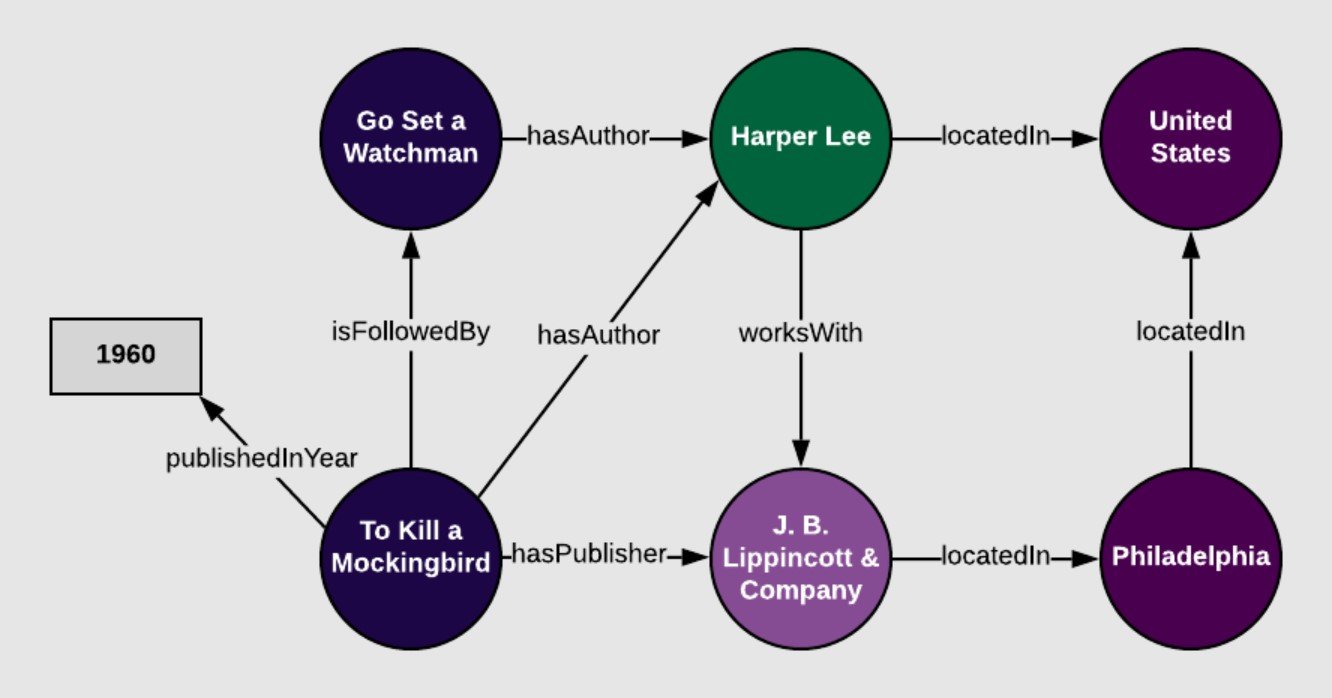

A large part of “intelligence” in digital systems comes from how well information is organised, not just how much data is stored. Many organisations have data spread across documents, databases, APIs, and human expertise. The challenge is that computers do not naturally understand meaning, context, or relationships the way people do. Knowledge ontologies address this gap by providing a formal, machine-readable way to represent concepts in a domain and how those concepts relate to each other. When designed well, an ontology becomes a shared language that helps systems classify information, reason over it, and support complex tasks such as search, recommendation, compliance checks, and decision support.
What a Knowledge Ontology Contains
A knowledge ontology is more structured than a simple taxonomy or a glossary. It defines three building blocks that make information usable for machines.
Concepts and Classes
Concepts represent the “things” in a domain. In healthcare, concepts might include Patient, Diagnosis, Medication, and LabResult. In e-commerce, they could be Product, Category, Brand, and Review. These are often modelled as classes, which act as containers for entities that share common properties.
Relationships Between Concepts
Relationships capture meaning. A Patient “Diagnosis” a Diagnosis. A Product “belongsTo” a Category. A Contract “isApprovedBy” a Role. These links make information navigable and allow a system to infer connections that are not explicitly stored in one place.
Properties and Constraints
Properties define attributes such as date, status, region, or priority. Constraints specify rules. For example, a Medication might require a dosage unit, or an invoice must be associated with exactly one vendor. These constraints help validate data quality and ensure consistency across systems.
Together, concepts, relationships, and constraints create a semantic model that can support both humans and machines.
Why Ontologies Matter for Practical AI Systems
Many AI projects struggle because data is not aligned across sources or because the system cannot reliably interpret context. Ontologies provide structure that makes downstream tasks easier and more dependable.
Better Search and Discovery
Keyword search often fails when terminology varies. One team writes “customer,” another writes “client,” and a third writes “account.” With an ontology, these concepts can be linked, so search becomes meaning-based rather than string-based. This improves findability for internal knowledge bases, support portals, and product catalogues.
Data Integration Across Systems
In real organisations, datasets are created for local needs. An ontology acts as a unifying layer, mapping different schemas into a consistent conceptual model. This reduces ambiguity and makes it easier to combine information from CRM, ERP, analytics systems, and operational logs.
Explainable Reasoning and Rules
Ontologies are useful when tasks require clear logic, such as eligibility rules, compliance validation, and policy enforcement. Because relationships and constraints are explicit, results can often be traced and explained. This is especially valuable in regulated industries where “why” matters as much as “what.”
For learners exploring structured AI foundations through an ai course in bangalore, ontologies are often introduced as a bridge between pure data-driven modelling and knowledge-driven reasoning in production systems.
Where Ontologies Are Used in the Real World
Ontologies are not theoretical artefacts. They are used across industries because they support repeatable, scalable decision-making.
Customer Support and Service Operations
Support teams deal with fragmented information: product versions, known issues, troubleshooting steps, customer history, and policy rules. An ontology can connect these pieces so a system can recommend solutions based on context, not just keywords. It can also standardise how issues are categorised, reducing resolution time and improving reporting accuracy.
Fraud, Risk, and Compliance
Fraud detection often involves patterns across identities, transactions, devices, locations, and behaviours. Ontologies help model these relationships so systems can detect suspicious connections and reason about risks. Compliance teams also benefit because ontologies can encode policy requirements and link them to evidence sources.
Healthcare and Life Sciences
Healthcare data is complex and highly relational. Conditions relate to symptoms, medications, procedures, and lab results. Ontologies help standardise medical concepts and enable consistent analytics across institutions. They also support clinical decision support by linking patient data to guidelines and knowledge bases.
These examples show a key point: ontologies are most valuable where the domain is complex, terminology varies, and relationships drive decisions.
How to Build an Ontology That Stays Useful
Building an ontology is not just a modelling exercise. It is an operational discipline.
Start With Real Use Cases
Begin with two or three high-impact tasks such as improving search, consolidating reporting, or supporting recommendations. The ontology should be shaped by what the organisation needs to do, not by modelling everything in the domain at once.
Involve Domain Experts Early
Ontologies encode meaning. Domain experts help define terms accurately and highlight edge cases that a purely technical team may miss. Regular reviews prevent drift and ensure the model matches real workflows.
Treat It as a Living Asset
Domains change. Products evolve, policies update, and new categories emerge. Ontologies need governance, versioning, and change control. Without this, they become outdated and lose trust.
Many practitioners learn these practical design and governance considerations while applying concepts from an ai course in bangalore, especially when transitioning from experiments to production-ready knowledge systems.
Conclusion
Knowledge ontologies give computers a structured way to understand a domain through concepts, relationships, and constraints. They improve search, enable data integration, support explainable reasoning, and strengthen the foundations of AI systems that must operate reliably in real environments. When built around clear use cases and maintained with strong governance, ontologies become a strategic asset that connects data, people, and processes through a shared, machine-readable understanding of meaning.
